 |
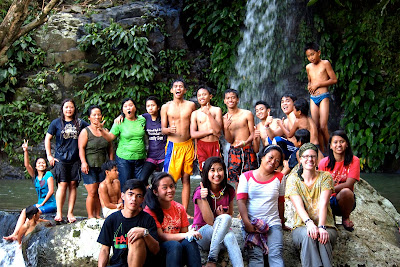
| My students found a waterfall near Abian, Nueva Vizcaya. |
If I did not know that I would be back again one day, I
think these final moments in the Philippines would be much more difficult;
however, Lord willing, I will be back in January 2015 for Come to the River,
Happy Family’s annual leadership conference. (It will be skipping one year, so
I have until 2015 to prepare for my next trip to Asia.) This place has been a
place of learning, healing and meditation. I thank God that he brought me to
this island country, taking me completely unawares by his love and provision in
my life. God is great, and he is faithful to guide me, as I follow the path led
by Jesus Christ. I have never felt this established before in my thoughts, in
my plans and in my desires. I attribute this state of being to the time I have
spent in the Philippines because I had the opportunity to look at myself pretty
deeply and look at God quite profoundly, seeing where I fit in and what I must
do. I’m ready to hang up my wandering shoes and get to work.
 |
| My students, "the World Changers" |
After returning from Myanmar, I came back to the Bible
school in Baguio, which was in full preparation mode for graduation and the
outreach trip planned to the province of Nueva Vizcaya. I was the guest speaker
for the graduation ceremony, an honor bestowed upon me as the ambassador for the
McCartys and their representative at the ceremony. The class was called “The
World Changers” class, and I spoke of the need to surrender their lives to
Jesus in order to follow God’s plan for their lives and the way in which daily,
personal sacrifice keeps that commitment to surrender fresh and palpable. I am
hopeful that my students (14 graduates) will actually change the world,
starting in their own communities.
 |
| Nueva Vizcaya is particularly lovely with the green rice paddies and blue mountains. |
The day after graduation, we left on an outreach excursion
to meet with a rural church community in Abian, Nueva Vizcaya. I love that
province because of the beautiful combination of bright green rice fields and
the bluish deep green of the mountains that surround the fields and loom above
the moist plains. The best part of the trip was being able to have that time
with my students before sending them back to their homes. I hope to see them
all again.
 |
Hannah's 6th birthday and her homemade Barbie cake
 |
| Staff outing to the Itogon hotsprings |
|
When the students left, the school felt very empty, but
Jether and Hannah (the 8 and 6 year old children of the Bible school directors)
filled the void with their chatter and running around. We even made it to the
Itogon hot springs for a day of relaxation and bonding. I had fun making Hannah
a Barbie cake for her 6th birthday; it actually turned out pretty well in spite
of my limited baking materials and was appreciated by all her guests (the Bible
school staff and her family). I completed the reformatting and organizing of
the Bible school curriculum, spending about 100 + hours on the project. I am
pleased that it is done and organized on flash drives for each of the staff
members. Tomorrow, March 28th, is my last day in Baguio, and I will leave with
a sense of a job well done and purpose completed. I am off to Vietnam to
fellowship with the young people and to bring a message of encouragement to my
friends and their church community for Easter. One more week in Asia!
 |


Comments